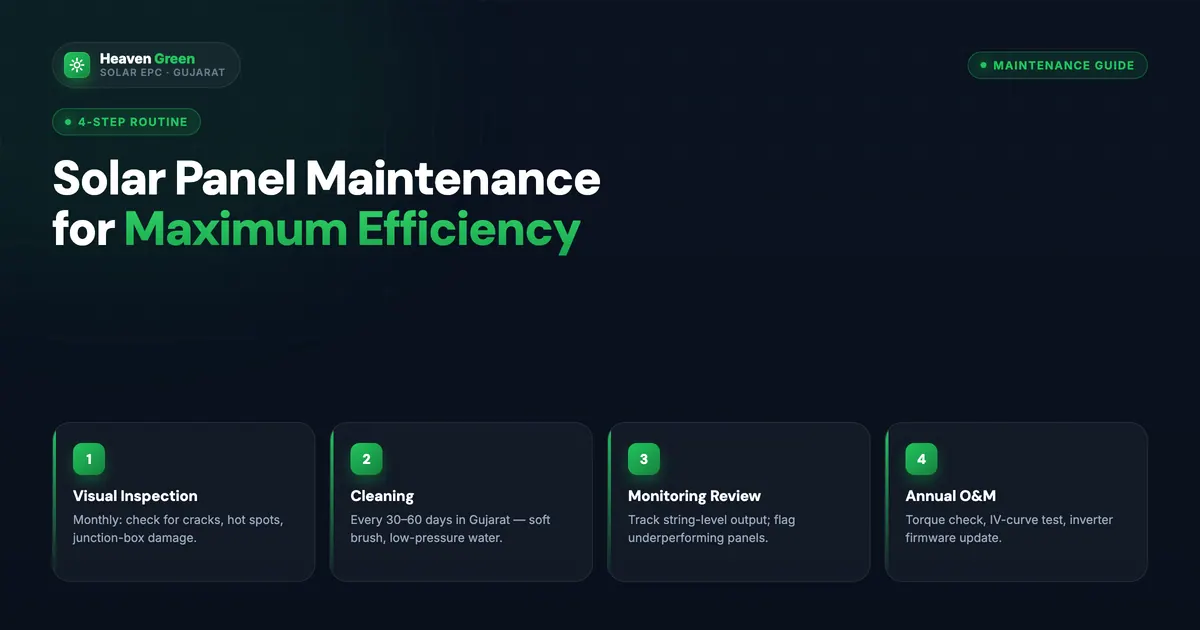
Solar Panel Maintenance for Maximum Efficiency
Solar systems are among the most reliable power sources available — but their performance depends on care. Neglect the basics and generation losses can be significant. Attend to them, and your system delivers maximum output and ROI for 25+ years.
Solar is low-maintenance, not zero-maintenance. This guide covers exactly what needs attention, how often, and what is safe for owners versus what requires a qualified technician.
Why Solar Maintenance Matters
1. More Energy from the Same Sunlight
Dust, bird droppings, pollution haze, and salt deposits block light. Even a thin layer can cut output meaningfully. Clean panels and healthy wiring restore generation that you have already paid for.
Research shows that some of the worst soiling zones in the world include India, the Middle East, North Africa, and China, where peak generation losses can range from 10% to as high as 70% if panels are left unmaintained.
2. Longer Life for Expensive Components
Loose terminals, hot spots, and water seepage shorten the life of inverters, junction boxes, and panels. Early checks prevent small issues from becoming expensive failures.
3. Safety for People and Property
Tight connections, intact insulation, good earthing, and working surge protection reduce fire and shock risks significantly.
4. Steady Return on Investment
Your payback calculation assumes the plant runs near rated performance. Maintenance protects that assumption for homes, housing societies, MSMEs, schools, hospitals, and factories alike.
Which Components Need Regular Attention?
Panels
- Visual inspection for cracks, hot spots, snail trails, and new shading sources
- Gentle cleaning with soft water and a microfiber cloth or soft brush
- No harsh detergents, no high-pressure washers
DC Side, Strings, and DCDB
- Fuses, surge protection devices, and string connectors
- Cable ties, routing, and condition of insulation
- Tightness of all terminals inside the DC distribution box
Inverter and ACDB
- Error logs and alarms
- Ventilation grills and fan filters (dust buildup causes overheating)
- Cable tightness and surge protection status
- Output voltage and frequency within normal range
Structure and Roof Interface
- Rust or corrosion on rails, clamps, and fasteners
- Roof waterproofing integrity around mounts
- Drainage paths free from debris
Earthing and Lightning Protection
- Continuity and earth resistance tests
- Bonding of all metallic parts
- Inspection of lightning arrestor and down conductors where installed
Monitoring System
- Accurate data display and logging
- Stable internet or SIM connectivity
- Alerts functioning for sharp output drops or inverter trips
How Often Should You Maintain Your Solar System?
Quick Check Every Week
Open your app or energy meter and compare daily units to the same season last month. Listen near the inverter for unusual buzzing. Inspect panel surfaces from a safe distance.
Routine Service Every 3 Months
- Panel cleaning
- DC and AC terminal tightening
- SPD and fuse checks
- Earthing tests
- Structure and fastener inspection
- Photos for records
Annual Health Audit
- Thermal scan or IV curve test (if available)
- Inverter firmware review
- Insulation resistance measurement
- Full waterproofing review of roof mounts
- Label and string map update
India-Specific Seasonal Checklist
Research demonstrates that solar PV systems can experience a 10% performance loss during peak summer and a 6% loss during winter due to dust and environmental factors. If panels are not cleaned for a full year, dust can reduce solar radiation reaching cells by 60–70%.
Summer: High Heat
- Clean glass early morning or late evening — sudden cooling on hot glass causes thermal stress
- Ensure inverter room ventilation is completely clear, no blocked grills
- Monitor for high-temperature inverter faults
Monsoon: Heavy Rain and Wind
- Check roof drains — no pooled water near panel mounts
- Inspect DB gaskets and enclosure doors for moisture ingress
- Confirm earthing values after the first significant storm
Post-Monsoon
- Tighten all fasteners after wind season
- Recheck waterproofing integrity
- Remove fallen leaves from gutters and mounting rail channels
Winter and Fog Belt (North India)
- Light fog film can reduce morning generation
- Plan a gentle wipe if residue builds up on panel glass
- Monitor morning startup voltages closely for any inverter delay
Coastal Zones
- Watch for surface rust on structures and white salt crust on panels
- Rinse gently with soft water more frequently
- Apply anti-corrosion touch-up to structural metalwork where permitted
What You Can Do Yourself vs. What Needs a Technician
Safe for Owners and Facility Teams
- Rinse and clean panels with soft water and a soft brush (no high pressure, no harsh chemicals)
- Basic visual inspection from safe access areas — never step on panels
- App-based monitoring, record keeping, and photos of visible issues
- Vegetation and shade management around ground-mounted arrays
For Qualified Technicians Only
- Opening DCDB or ACDB, tightening live terminals, replacing fuses or SPDs
- Earthing measurements and insulation resistance tests
- Inverter firmware updates and deep fault diagnostics
- Thermal imaging and IV curve testing
Safety Note: Before any cleaning or contact with the system, follow the shutdown steps posted at your site: DC off, AC off, wait for discharge, then proceed. Reverse the steps at startup. If steps are missing, ask your installer to provide a laminated guide near the inverter.
Common Mistakes to Avoid
- Cleaning hot glass in the middle of the day (thermal stress risk)
- Using hard water or detergent (leaves spots and films that reduce output)
- Ignoring inverter warnings — repeated trips are early signs of a developing issue
- Loose or dangling cables that wind rubs, cutting insulation over time
- Dusty or closed inverter rooms causing heat buildup that shortens inverter life
- Missing labels — future service teams cannot trace strings or AC circuits safely
Warning Signs That Need Immediate Service
Contact a technician if you observe:
- Daily generation drops sharply while weather is unchanged
- Inverter shows frequent DC low, grid fault, or islanding errors
- Visible burn marks inside DBs or a burnt smell near any component
- Earthing test values have drifted from your site baseline
- New shade has appeared — a hoarding, water tank, or nearby building extension
Conclusion
Regular cleaning and timely checks prevent generation losses that, in neglected systems, can reach 60–70% in India’s dusty regions. Simple steps — monitoring, seasonal inspections, and professional annual servicing — protect efficiency, safety, and return on investment for the full 25-year life of your system.
Solar is reliable. With basic care, it stays that way.
Professional Solar Maintenance from Heaven Green Energy
Heaven Green Energy provides scheduled maintenance services for rooftop and ground-mounted solar systems across Surat, Ahmedabad, and Gujarat. From routine cleaning to annual health audits, our technicians keep your system performing at its best.
Call us today: +91 63904 05060
Surat: +91 63904 05060 | Ahmedabad: +91 87996 96345